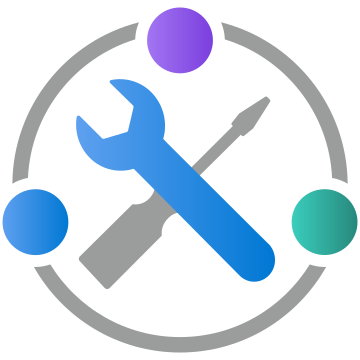
Workload Orchestration PNG and SVG Icon
Workload Orchestration coordinates tasks, services, and infrastructure resources to efficiently run distributed workloads in the Azure cloud.
Explore More Icons
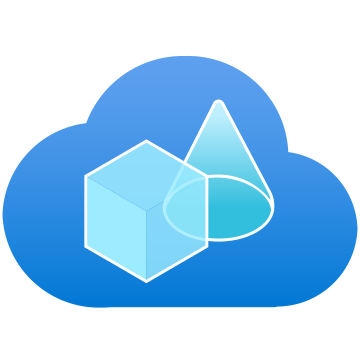
Remote Rendering
Azure Remote Rendering renders high fidelity 3D content in the cloud and streams it to devices ideal for AR/VR and engineering visualization even on mobile hardware.
Bot Services
Azure Bot Services is a managed platform for building, deploying, and managing intelligent bots. It integrates with Microsoft Bot Framework and supports natural language understanding via Azure Cognitive Services.

Network Interfaces
Network Interfaces in Azure enable virtual machines to communicate with other resources, define IP configurations, and support multiple NICs per VM.
Azure Monitor Pipeline
Azure Monitor Pipeline facilitates the ingestion and processing of telemetry data across Azure services, providing actionable insights through custom metrics and alerting pipelines.
.svg)
Virtual Machines (Classic)
Virtual Machines (Classic) refer to legacy IaaS deployments in Azure, using the older service management model instead of Azure Resource Manager.
Cubes
Cubes symbolize Azure’s analytical and BI services like SQL Server Analysis Services (SSAS), enabling multidimensional data modeling.
Cache Redis
Azure Cache for Redis is a fully managed, in memory cache service based on the open source Redis engine. It enhances application throughput, reduces latency, and supports high availability and clustering.
Templates
Azure Templates allow repeatable deployment of resources using ARM or Bicep, supporting infrastructure as code and automation.

Notification Hub Namespaces
Notification Hub Namespaces group multiple notification hubs, simplifying large scale mobile push notification delivery across platforms like iOS and Android.

Guide
The Guide icon directs users to tutorials, documentation, and conceptual walkthroughs within Azure Portal. It helps users discover best practices and learn how to use services effectively.

Bug
A Bug in Azure DevOps represents a defect or issue found during software development. It allows teams to track, prioritize, and resolve software errors using agile project management practices.
AKS Automatic
AKS Automatic refers to Azure Kubernetes Service with automated scaling and management capabilities, streamlining container orchestration for developers.
Peering Service
Azure Peering Service enhances connectivity to Microsoft's cloud via customer ISPs, delivering lower latency and improved reliability for users.
Service Endpoint Policies
Azure Service Endpoint Policies help control traffic to Azure service endpoints, allowing granular access control from virtual networks to service instances.
SCVMM Management Servers
Azure SCVMM Management Servers integrate with System Center Virtual Machine Manager to manage hybrid virtual environments and migrations.
Virtual Router
Azure Virtual Router provides dynamic routing capabilities to manage network traffic between Azure subnets and on premises infrastructure.
DNS Security Policy
Azure DNS Security Policy enables organizations to enforce advanced security rules for DNS traffic, helping prevent malicious domain access, DNS tunneling, and data exfiltration. It enhances DNS level protection with policy based controls aligned with enterprise compliance standards.
Virtual Network Gateways
Virtual Network Gateways enable encrypted connections between on premises networks and Azure Virtual Networks using VPN or ExpressRoute.

MedTech Service
Azure MedTech Service supports medical technology solutions, providing cloud infrastructure tailored for certified, compliant, and secure medical applications.

Cost Budgets
Cost Budgets in Azure enable setting financial limits for cloud usage, with alerts triggered when nearing or exceeding budget targets.

Defender Meter
Defender Meter enhances the security of smart meters and telemetry systems, ensuring accurate data reporting and preventing manipulation or cyber attacks targeting energy or utility networks.
Multi Tenancy
Multi Tenancy in Azure allows multiple customers to share the same application or infrastructure while securely isolating their data and configurations.
Verifiable Credentials
Verifiable Credentials in Azure enable the creation, presentation, and verification of digital credentials using decentralized identity technology.
NAT
Azure NAT Gateway allows outbound internet connectivity for resources in a virtual network, enabling predictable IP usage and enhanced security for virtual machines.